

Startups and established companies use freelancers to access specialised skills, stay flexible, and move faster without long-term hiring commitments.
For freelancers in the UAE and abroad, it is important to understand how companies hire freelancers. Businesses follow clear patterns when looking for freelance talent and prefer freelancers who are professional, visible, and easy to work with.
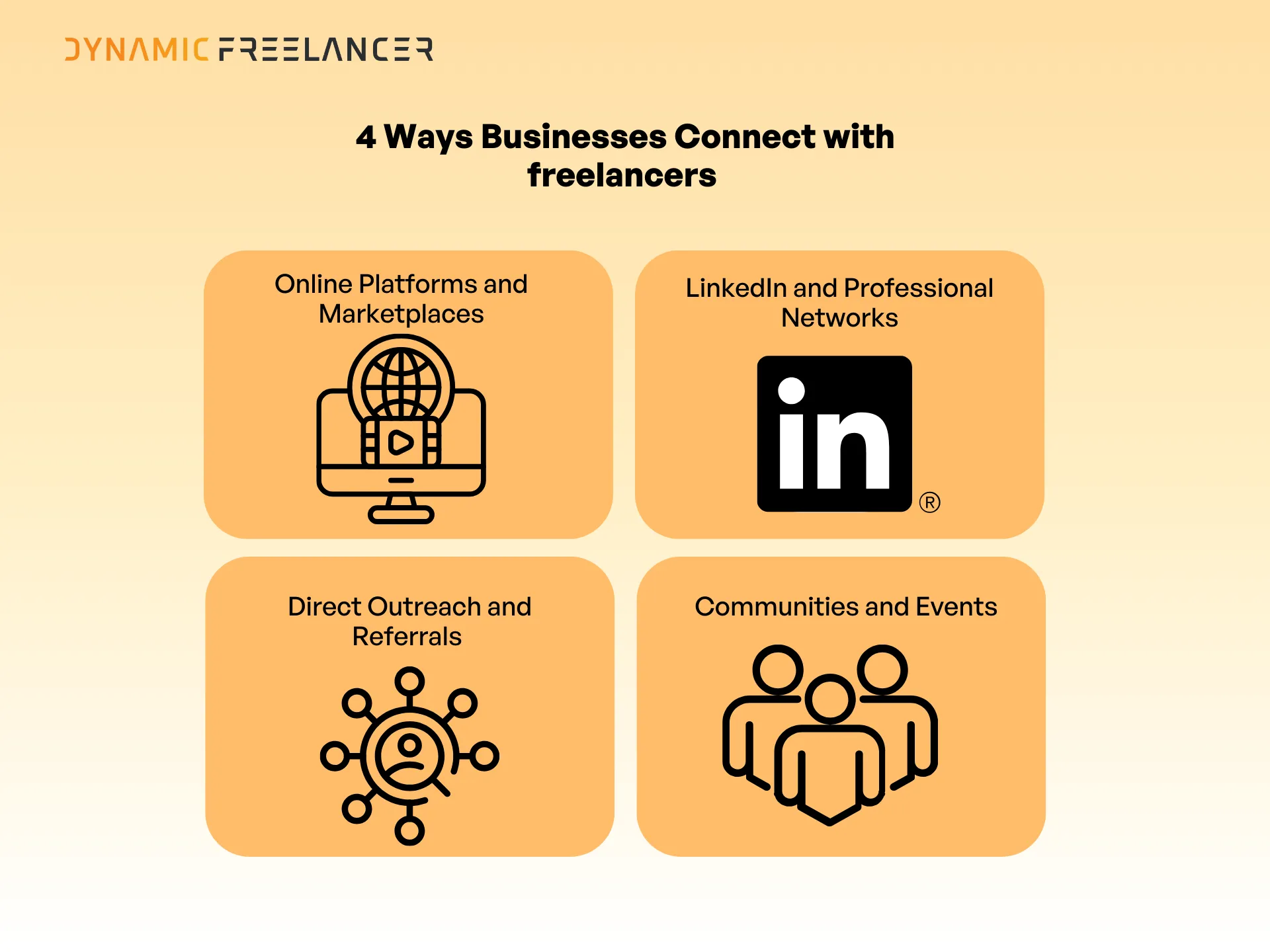
Most businesses connect with freelancers in four main ways: online hiring platforms, professional networks like LinkedIn, direct outreach and referrals, and curated communities or long-term collaboration networks. Understanding these methods helps freelancers focus their efforts and attract better business clients.
Businesses connect with freelancers through four main methods: platforms, LinkedIn, referrals, and communities/events.
Hiring platforms help companies compare profiles fast and hire for specific projects.
LinkedIn and social media help businesses assess credibility and reach out directly.
Referrals and communities reduce risk and lead to repeat work and longer relationships.
1. Online Platforms and Freelancer Marketplaces
Online platforms are one of the most common ways businesses connect with freelancers. These platforms allow companies to search for skills, review profiles, and hire freelancers without long hiring processes. For startups and small businesses, this offers speed and flexibility.
How Businesses Use Online Platforms to Find Freelancers
Businesses use freelancer platforms to solve specific problems. They post projects, search for freelancers with the right skills, or invite selected profiles to apply. This works well for short-term work, specialised tasks, and fast turnarounds.
Startups often use these platforms to test freelancers on small projects before offering ongoing work.
Best Freelancer Marketplaces for Companies
Freelancer hiring platforms vary by project size and budget. Some focus on quick tasks, while others support long-term collaboration. Businesses choose platforms that match how they want to work.
When reviewing profiles, companies look for clear service descriptions, relevant experience, and professional communication.
How Freelancers Can Stand Out on Hiring Platforms
Freelancers stand out by being clear and focused. Strong headlines, defined services, relevant portfolios, and quick responses help businesses decide faster.
Vague profiles, too many services, and slow replies often cause businesses to move on.
2. Professional Networks and Social Media
Professional networks and social media are key ways businesses connect with freelancers. Many companies prefer this method because it allows them to assess freelancers directly before making contact.
How Companies Hire Freelancers Through LinkedIn and Social Media
LinkedIn is a key platform businesses use to find freelancers. Companies search by skills, job titles, and industry, then review profiles and recent activity. Freelancers with clear profiles and visible experience are more likely to be contacted.
Many businesses reach out directly instead of posting jobs. A focused headline and clear description of services help them decide faster.
Using Social Media to Attract Business Clients
Freelancers attract businesses by sharing useful content, showing their work, and explaining the problems they solve. This helps companies understand what you offer before starting a conversation.
When businesses already trust your expertise, the hiring process becomes simpler.
Building Credibility Through Visibility
An active and clear online presence builds trust. Businesses look for freelancers who communicate well and appear consistent.
Freelancers who focus on visibility often receive inbound enquiries and build stronger client relationships.
3. Direct Outreach and Referrals
Direct outreach and referrals are some of the strongest ways businesses connect with freelancers. Companies trust recommendations and past experience more than ads or profiles. This method often leads to higher quality work and longer relationships.
How Businesses Find Freelance Talent Through Referrals
Businesses rely on referrals because they reduce risk. A freelancer who comes recommended is seen as more reliable and easier to work with. Many companies build a small group of trusted freelancers and return to them whenever new work comes up.
Over time, this becomes a simple system. Instead of searching again, businesses reuse freelancers who have already proven themselves.
How Freelancers Get Work Through Direct Outreach
Direct outreach works when it is clear and relevant. Businesses respond when a freelancer understands their problem and explains how they can help. Generic messages and copied pitches are often ignored.
Outreach fails when the message is unclear, too long, or focused only on the freelancer instead of the business. A short message that shows understanding and confidence works best.
Making Yourself Easy to Refer
Businesses refer freelancers who are easy to explain to others. Clear services, consistent quality, and professional communication matter more than creativity. If a business can describe what you do in one sentence, you are easier to recommend.
Repeat work and referrals come from delivering on time, communicating clearly, and making the business look good to their own clients or teams.
4. Communities, Events, and Long-Term Collaboration
Communities and events help businesses connect with freelancers through trust and relationships. Instead of searching from scratch, companies prefer freelancer networks where people are active, recommended, or already known.
How Businesses Use Communities to Find Freelancers
Businesses use communities and events to meet freelancers, understand their skills, and build confidence before hiring. Curated networks save time and reduce the risk of a bad fit.
How Long-Term Freelancer Collaboration Works
Many long-term client relationships start with one small project. If the freelancer delivers well, the business continues with repeat work or a retainer.
How to Become a Go-To Freelancer
Businesses keep freelancers who communicate clearly, meet deadlines, and make work easy. Reliability leads to repeat work and referrals.
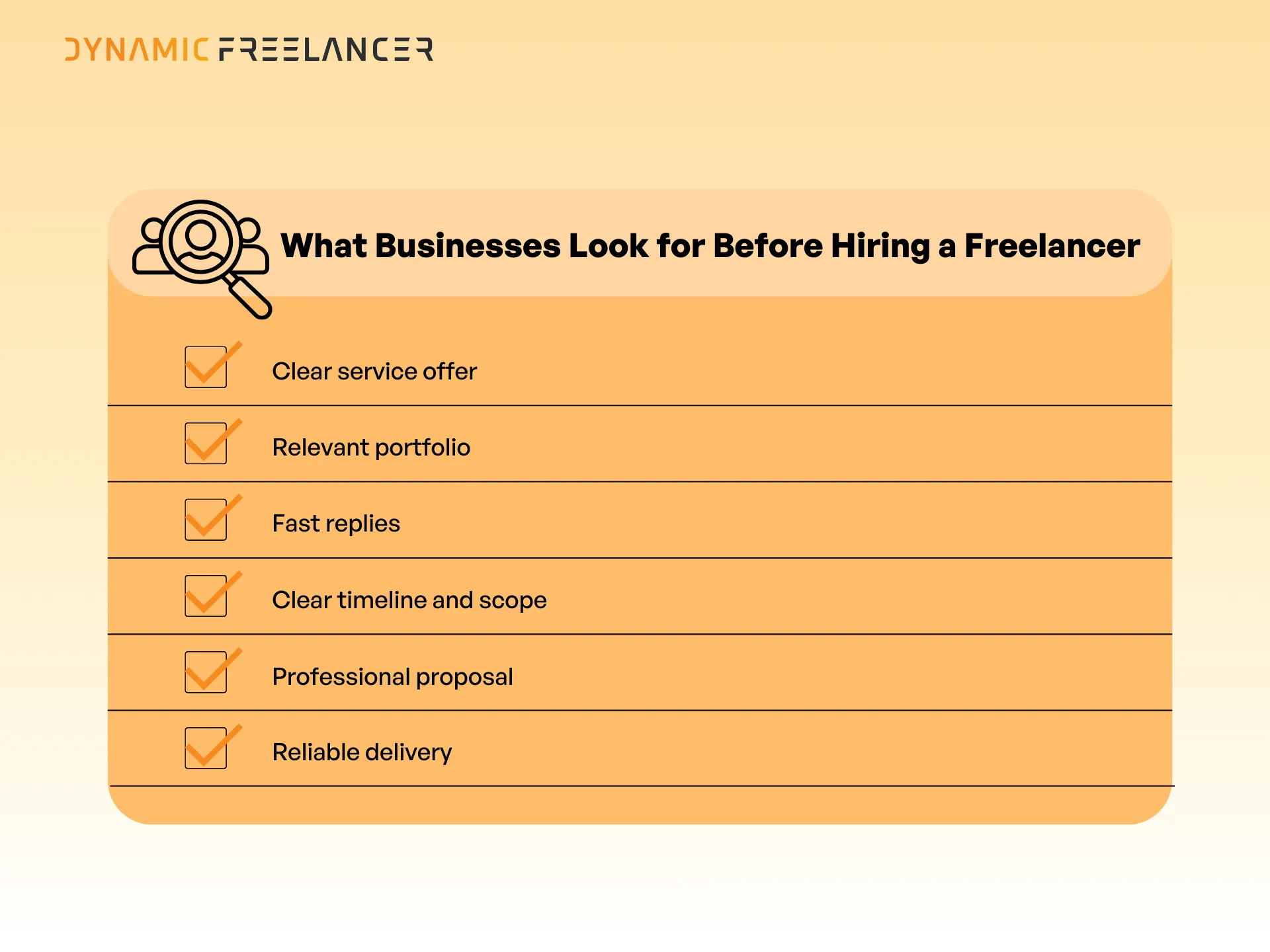
What Businesses Look for Before Hiring a Freelancer
Businesses hire freelancers who feel low-risk. They want proof, clarity, and smooth communication.
They avoid:
Vague profiles or unclear offers
Slow responses and missed deadlines
Unclear pricing or shifting scope
Overpromising without proof
Worth a look: Top High-Demand Freelance Professions in the UAE
Choosing the Best Way to Connect With Businesses as a Freelancer
Businesses connect with freelancers in four main ways: online hiring platforms, professional networks like LinkedIn, direct outreach and referrals, and communities or events. Each method helps companies find skilled freelancers faster and with less risk.
As a freelancer, you get better results when you focus on one or two methods and stay consistent. Strong profiles, clear communication, and proof of your work make it easier for businesses to choose you and hire you again.
Frequently Asked Questions
Find answers to common questions about this topic
How do companies hire freelancers quickly?
Where do businesses find freelance talent?
What do businesses look for before hiring a freelancer?
How do startups connect with freelancers?
Disclaimer: This article is intended to provide practical, up-to-date information. Details may vary based on individual circumstances, location, or changes in regulations. The information provided is for informational and educational purposes only.